I Was Stuck in a Dead-End Job. Here's How Digital Skills Changed Everything.
A personal story of going from a dead-end job to building a thriving freelance career with digital skills. Covers the 3 skills that made the biggest difference, the realistic timeline, and how to start your own transition.

Entrepreneur and Coach
Two years ago, I was stuck.
Dead-end job. No growth. No prospects. Watching others move forward while I stayed still. The kind of stuck where you know something needs to change, but you don't know what, and you don't know where to start.
Then I made a decision: stop waiting, start learning.
I learned digital skills — the practical ones that actually pay. And everything changed.
This is my story. Not because it's unique, but because it's not. Thousands of Africans are in the same position I was in. And if I can make the shift, so can you.
The Problem: Feeling Stuck
Let me paint the picture of where I was:
The Job:
I was working a job that paid just enough to survive — not enough to save, not enough to invest, not enough to build anything. The work was repetitive. There was no learning. There was no growth. I could see exactly where I'd be in 5 years: exactly where I was, just older and more tired.
The Frustration:
Every day, I'd scroll through social media and see people my age — some younger — building businesses, working remotely, earning in dollars, traveling, creating. They weren't smarter than me. They weren't more connected. They just had something I didn't: skills that the digital economy values.
The Fear:
The worst part wasn't the job. It was the fear. The fear that I'd stay stuck forever. The fear that I was too old to change. The fear that I didn't have the money to go back to school. The fear that it was too late.
If any of that sounds familiar, I want you to know: it's not too late. It's never too late. But you have to start.
The Shift: From Waiting to Learning
The turning point wasn't dramatic. There was no single moment where everything changed. It was a decision — a boring, unglamorous decision — to stop waiting for the "right time" and start learning.
Here's what I did:
1. I admitted I needed help.
I tried learning on my own. I watched YouTube videos. I read blog posts. I collected bookmarks. But I had no structure. I had no idea what to learn next. I'd spend hours learning random things that didn't connect to anything. I needed a roadmap.
2. I invested in a structured course.
Instead of continuing to collect random tutorials, I invested in a structured course that gave me a clear curriculum. What to learn, in what order, with practical projects. This was the game-changer. For the first time, I had a path.
3. I committed to daily practice.
Even 30 minutes a day. Even when I was tired. Even when I didn't feel like it. Consistency beats intensity. Every small session added up.
4. I started applying what I learned immediately.
I didn't wait until I "finished" the course. I started practicing on real projects — my own social media, a friend's business, a local shop that needed help. Real practice accelerates learning faster than any course alone.
What I Learned: The 3 Skills That Made the Biggest Difference
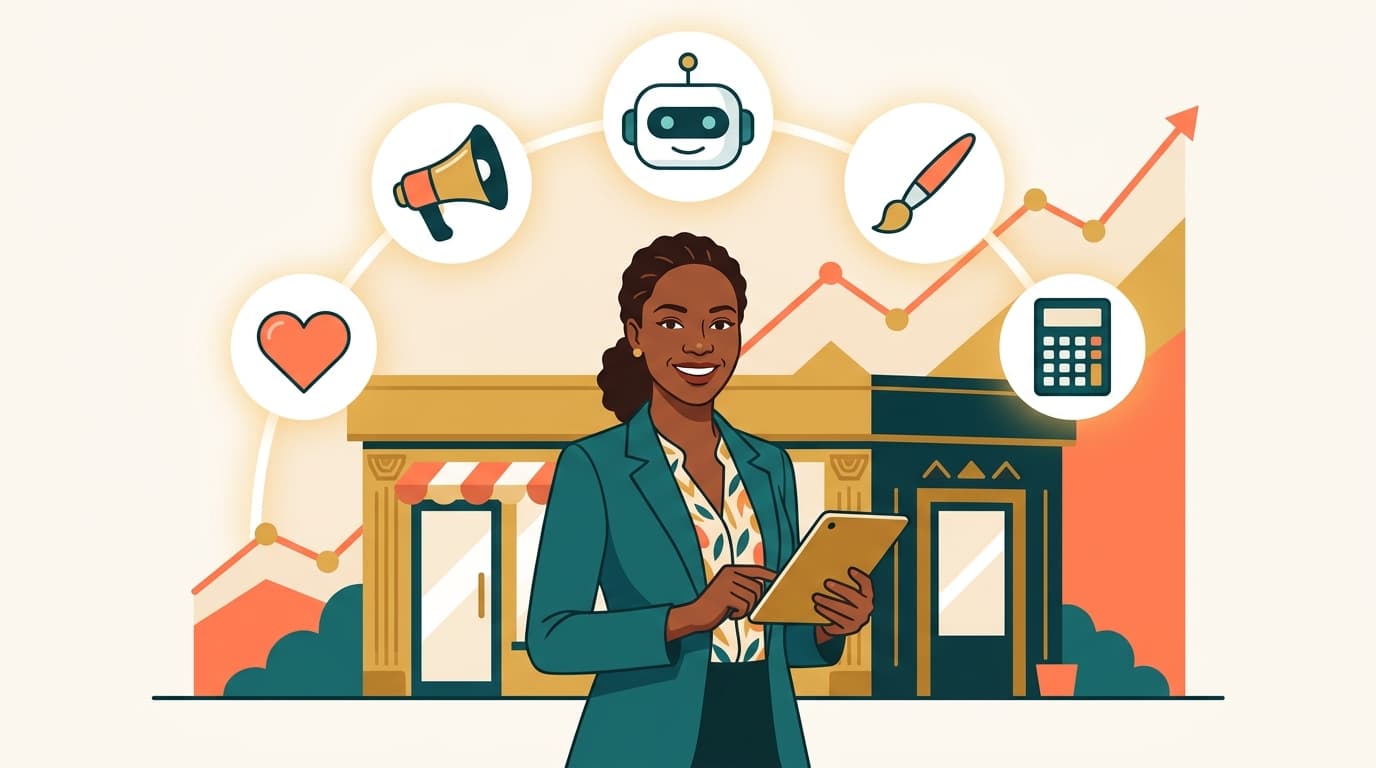
I learned many skills, but these 3 made the biggest difference in my transition:
Skill 1: Digital Marketing
Why it mattered: Every business needs it. Every single one. Small businesses, big businesses, local businesses, online businesses — they all need to attract customers online. And most of them are doing it badly.
How I practiced: I started by managing my own social media strategically. I treated my personal brand like a business. I tested different content formats, analyzed what worked, and documented everything. Then I offered to help a local business for free — just to get a real case study.
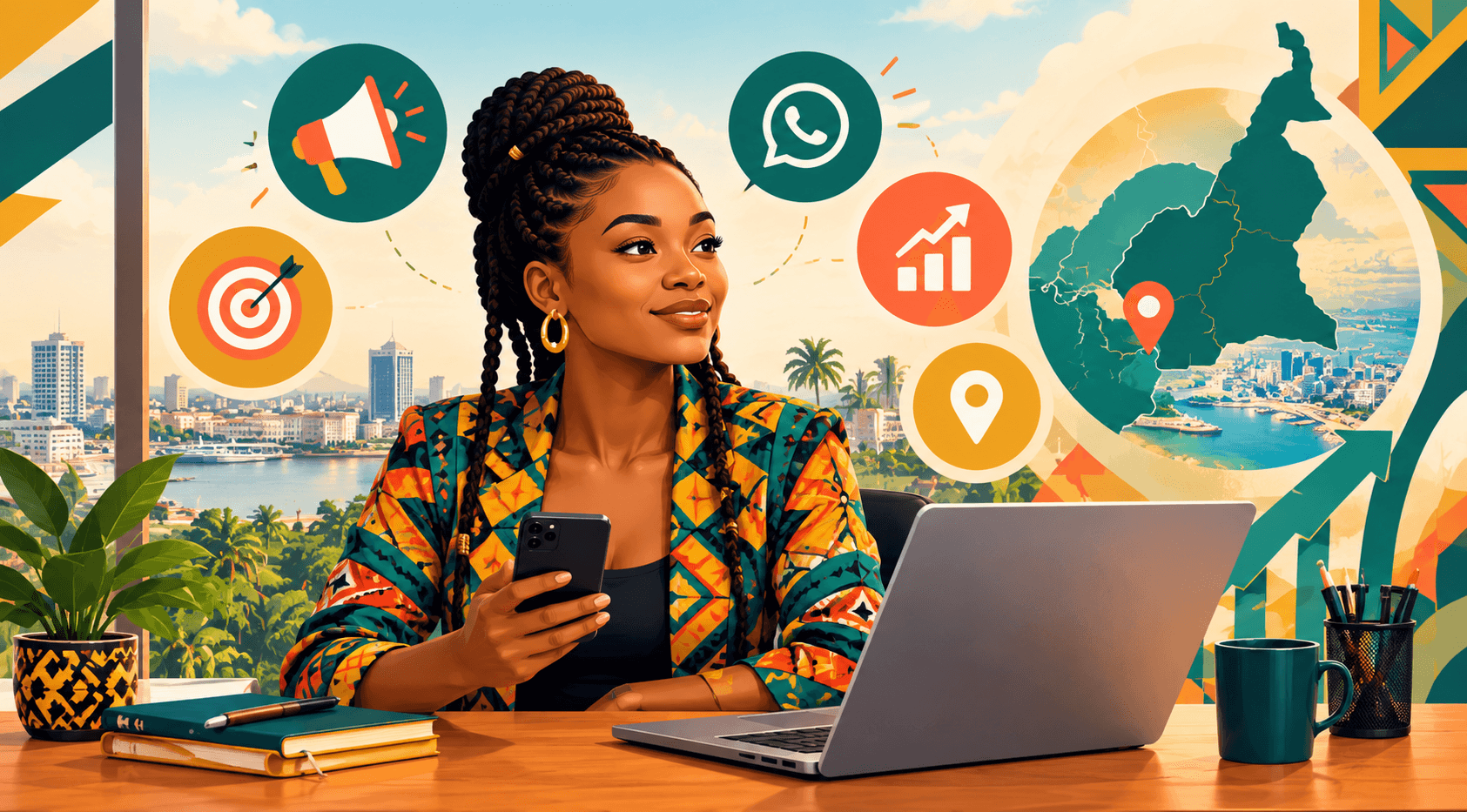
The result: Within 2 months, I had my first paying client. A small business in Douala that needed help with their social media. I charged them $200/month. It wasn't a lot, but it was proof that I could earn from this skill.
Skill 2: Social Media Management
Why it mattered: Social media is where the attention is. Businesses know they need to be on social media, but most owners don't have time to do it well. They need someone who can handle it for them — consistently, strategically, and with results.
How I practiced: I managed my own accounts, then a friend's business, then a local shop. I built a portfolio of before-and-after results. I documented engagement growth, follower increases, and — most importantly — customer inquiries generated.
The result: Social media management became my primary income source. Within 4 months, I had 3 clients on retainer, paying a combined $600/month. That was more than my previous salary.
Skill 3: AI Tools & Automation
Why it mattered: AI is not the future — it's the present. Businesses that use AI tools are operating faster, cheaper, and smarter. Those that don't are falling behind. I realized that if I could help businesses implement AI solutions, I'd be offering something rare and valuable.
How I practiced: I started using AI tools in my own daily work — ChatGPT for writing, AI design tools for graphics, AI for data analysis. I documented what worked, what didn't, and how much time it saved. Then I started showing business owners how they could use these tools.
The result: AI consulting became my highest-paying service. I charged $300–$500/month per business to help them implement AI tools. This skill differentiated me from every other "social media manager" out there.
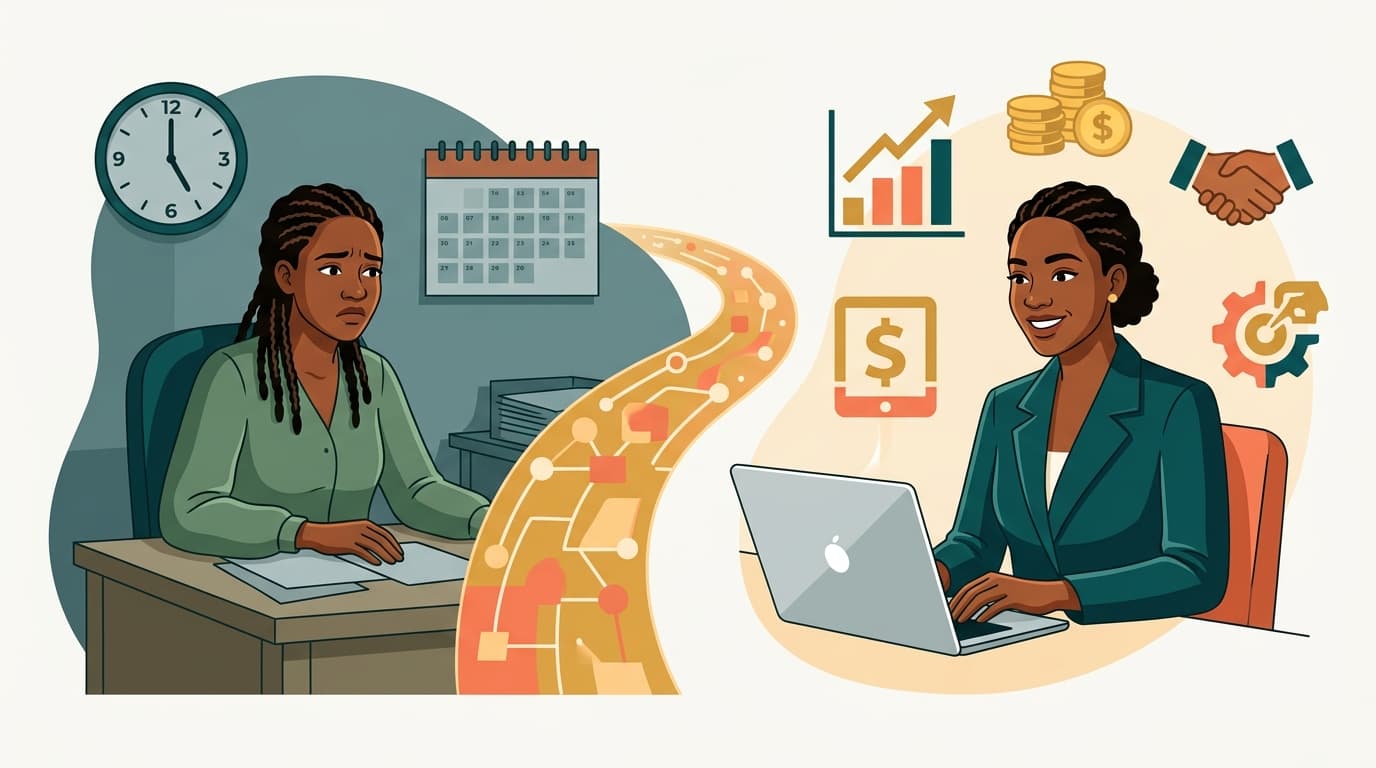
The Results: Where I Am Now vs. Where I Was
Let me be specific about what changed:
Income:
- Before: Barely enough to survive, no savings, no investments
- After: Multiple income streams, consistent revenue, ability to save and invest
Options:
- Before: One option — keep the same job or find another similar job
- After: Multiple options — freelance full-time, start an agency, consult, teach, or combine income streams
Confidence:
- Before: Constant doubt, fear of being left behind, feeling like I was running out of time
- After: Confidence that I can adapt, learn new skills, and create opportunities regardless of the economy
Network:
- Before: Limited to colleagues in the same industry
- After: Connected with entrepreneurs, freelancers, digital professionals, and potential clients across Africa and globally
Mindset:
- Before: "I'm stuck. I can't change. It's too late."
- After: "I can learn anything. I can create opportunities. I control my trajectory."
The shift wasn't just financial. It was psychological. I went from feeling like a victim of circumstances to feeling like the architect of my own life.
How Long It Actually Took
I want to be honest about the timeline because I think people expect overnight success. That's not what happened.
Month 1–2: Learning
- Completed the core lessons in my course
- Practiced daily on my own projects
- Started building a portfolio
Month 2–3: First Client
- Offered to help a local business for free
- Got my first testimonial
- Started charging for my services
Month 3–4: Multiple Clients
- Had 3 clients on retainer
- Was earning more than my previous salary
- Quit my job
Month 4–6: Scaling
- Raised my rates
- Added AI consulting as a premium service
- Built a simple website and started getting inbound leads
Month 6–12: Stability
- Had a consistent client base
- Was earning 3x my previous salary
- Had savings and investments for the first time
The transition took about 4 months to the point where I could quit my job. It took about 6 months to reach stability. It took about 12 months to build a sustainable, growing business.
It wasn't overnight. But it was faster than I expected. And it all started with a decision to stop waiting and start learning.
Your Turn: If You're Feeling Stuck
If you're reading this and you're in the same position I was — stuck, frustrated, scared — here's what I want you to know:
1. You're not alone.
Thousands of Africans are in the same position. The job market is tough. The economy is uncertain. But the digital economy is growing, and it needs people with practical skills.
2. You don't need to go back to school.
You don't need a 4-year degree. You don't need to spend thousands on tuition. You need structured, practical courses that teach you skills the market actually values.
3. You don't need to quit your job tomorrow.
Start learning while you're employed. Build skills on the side. Get your first client. Build confidence. Then make the transition when you're ready.
4. You don't need to be a tech genius.
Digital skills are learnable. They're practical. They're not about coding or complex technology. They're about solving real problems for real businesses.
5. You just need to start.
The hardest part is the first step. After that, momentum takes over. But you have to start.
Your Next Step
You've read my story. Now it's time to write your own.
- If you're ready to learn: Get the Full 16-Course Pack — it covers all 3 skills I mentioned plus 13 more, with structured lessons, practical projects, and bonus resources
- If you want to start focused: Pick the subpack that matches the skill that excites you most — Digital Marketing, AI & Tech, or Creative Design
- If you have questions: Message us on WhatsApp — we've been where you are, and we'll help you choose the right path
The digital economy isn't waiting. But the good news? There's still massive demand for every skill I mentioned. The question isn't whether these skills will pay off — it's whether you'll start before the market gets crowded.
Your move.
teChia Digital Academy — Practical digital skills for work, business, freelancing, and online growth. Built for Africa, open to the world.