Why Every Serious Business Needs a Digital Home
A professional website is only the front door. The real advantage is a connected system that helps the business operate better.

Entrepreneur and Coach
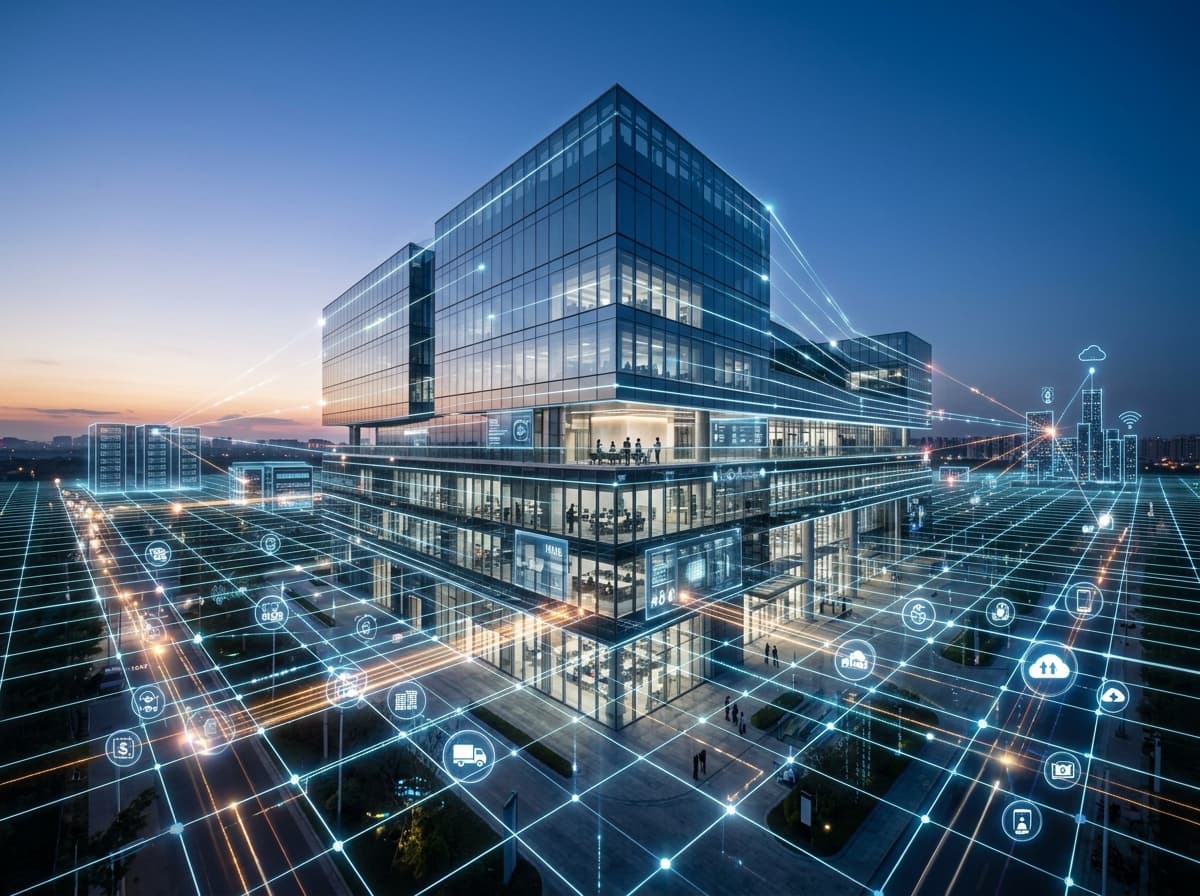
Imagine walking into a business with no sign outside, no clear reception area, no way to find information, and no obvious person to speak to. Even if the business itself is excellent, the experience creates friction before the customer ever gets to discover its value.
The digital version of that problem is everywhere.
A business may have a Facebook page, an Instagram account, a WhatsApp number, a Google listing, and perhaps even a website—but none of these pieces are properly connected. Customers have to search through posts to find information. Leads arrive through different channels and get lost in conversations. Employees copy information between spreadsheets. Follow-ups are handled manually. Management has no single view of what is happening.
That is why a modern business needs to think beyond simply having a website.
It needs a digital home: a reliable online foundation where customers can discover the business, understand what it offers, take action, and—when the business is ready—interact with the systems that help it operate.
The key idea: Your website should not simply exist. It should serve a business purpose.What Is a Digital Home for a Business?
A digital home is the central online presence a business can build around its brand, customers, content, services, and operations.
At its simplest, that may be a professional website with clear information, strong branding, contact details, and a way for potential customers to get in touch.
As the business grows, however, its digital home can become much more capable. It can connect marketing channels to lead generation, customer communication to internal workflows, and customer-facing experiences to business systems.
Think of it as an ecosystem rather than a single page on the internet.
Your Digital Home Can Connect the Entire Customer Journey
- Discovery: Google, social media, advertising, referrals and content
- Experience: Website, landing pages, services, products and information
- Conversion: Forms, calls, bookings, quote requests, purchases and inquiries
- Communication: Email, WhatsApp, notifications and customer support
- Operations: Dashboards, customer records, orders, workflows and internal tools
- Growth: Analytics, SEO, automation, AI and continuous optimization
Why a Social Media Page Is Not the Same as a Digital Home
Social media is extremely valuable for modern businesses. It can help you reach new audiences, build relationships, publish content, showcase products, and generate conversations.
But your social media presence and your business website serve different purposes.
A social platform is a channel. Your website can become the central destination that those channels point toward.
| Social Media | Business Website |
|---|---|
| Excellent for discovery and engagement | Provides a structured destination for your business |
| Controlled by a third-party platform | Provides significantly more control over your customer experience |
| Content competes with an algorithm-driven feed | Important business information can remain accessible and organized |
| Strong for conversations and community | Strong for search, information, conversion and owned content |
| Useful for campaigns and audience building | Can become the destination for campaigns, search traffic and referrals |
This is not an argument for choosing a website instead of social media.
A stronger digital strategy uses both.
Your social channels can help people discover you. Your website can give those people a place to understand your business, evaluate your offer, take action, and continue into the appropriate customer journey.
7 Reasons Your Business Needs a Strong Digital Home
1. Customers Need Somewhere Reliable to Find You
People increasingly research businesses before contacting or buying from them. They want to know what you offer, where you operate, how to reach you, whether you appear legitimate, and whether your products or services are relevant to their needs.
A professional website gives you a structured place to answer those questions.
Instead of asking a potential customer to search through months of social media posts, you can give them dedicated pages for your services, products, frequently asked questions, contact information, locations, testimonials, resources, and other important information.
That makes the customer journey easier—and reducing friction matters.
2. You Control More of the Customer Experience
A social media profile gives you a presence, but it also places your business inside someone else's platform.
On your website, you have considerably more control over how information is organized, how your brand is presented, what actions customers can take, and how different parts of the experience connect.
Your website can guide someone from:
- Learning about your business
- Understanding your offer
- Seeing evidence that you can help
- Choosing the appropriate next step
- Submitting an inquiry, booking, purchasing, or contacting your team
That is much more powerful than simply displaying a phone number and hoping visitors decide to call.
3. Your Website Can Build Trust Before the First Conversation
A professional digital presence cannot replace a good product or service. But it can make it easier for potential customers to understand and evaluate what you offer.
Clear service descriptions, professional branding, useful content, customer information, contact details, frequently asked questions, case studies where available, and a consistent visual identity all contribute to the experience.
The objective is not to make your business look expensive for the sake of appearance.
It is to make the business easier to understand and easier to trust.
4. Your Website Can Become a Lead-Generation Engine
A website does not have to wait passively for someone to call.
It can actively help turn attention into opportunities through:
- Contact forms
- Quote requests
- Booking forms
- Product catalogs
- Lead magnets
- Newsletter subscriptions
- Calls to action
- Online purchases
- Customer inquiries
Combined with search engine optimization, content marketing, social media, and advertising, your website can become an important part of your customer acquisition system.
This is one reason a website should be designed around business objectives, not just aesthetics.
5. Your Website Can Support Your Marketing
Every marketing channel needs somewhere useful to send interested people.
A social media campaign can generate attention. A Google search can generate intent. An advertisement can generate a click. A referral can generate curiosity.
What happens next?
A well-structured website can become the destination where that attention turns into understanding and action.
This makes your website part of your marketing infrastructure rather than a separate project that was "finished" once it went live.
6. Your Digital Home Can Reduce Manual Work
This is where the idea of a digital home becomes much more interesting.
A modern website can connect to other systems and workflows.
For example, instead of receiving a customer request and manually copying the information into a spreadsheet, a business could potentially connect the website form to a database, notification system, CRM, dashboard, email workflow, or other internal tool.
A booking request could enter a structured workflow. A customer could receive an automated confirmation. A sales team could see the request inside a dashboard. Management could eventually use analytics to understand where inquiries are coming from.
The exact solution depends on the business, but the principle is simple:
Your digital presence should reduce friction—not create another place for your employees to do manual work.7. Your Digital Infrastructure Can Grow With the Business
A business does not necessarily need a sophisticated digital system on day one.
In fact, building too much too early can waste money and create unnecessary complexity.
A better approach is to build according to the business's actual needs and expected growth.
You might start with:
Website → SEO → Lead capture → Booking → Customer portal → Dashboard → Automation → Integrated business system
Not every business will need every step. The important thing is having a digital foundation that can evolve as the business does.
Your Website Is the Front Door. What Is Behind It?
Calling a website the "front door" is useful because it explains the public-facing role of a website.
But a front door is only valuable because of what it leads into.
Behind a modern digital presence could be:
- A customer database
- A sales pipeline
- An appointment system
- An online catalog or store
- A customer portal
- An internal dashboard
- Inventory management
- Automated notifications
- Business analytics
- AI-powered customer assistance
- Integrations with other business tools
This is the difference between thinking of a website as a digital brochure and thinking of it as part of a digital business system.
For a small company, that distinction may not matter yet.
For a growing company, it can matter enormously.
Does Every Business Need the Same Kind of Digital Home?
No.
This is an important distinction.
The goal of digitalization should not be to give every company the same collection of tools. The goal is to identify what the business actually needs and introduce technology where it creates meaningful value.
A new business may only need a simple but professional website with clear information and strong contact options.
A growing service company may need bookings, forms, customer records, and automated communication.
A logistics company may eventually need customer tracking, internal operations, shipment information, and dashboards.
An online retailer may need product management, payments, inventory, customer accounts, order management, and fulfillment workflows.
A larger organization may need several connected systems operating together.
The right question is therefore not:
"What is the most advanced technology we can build?"
It is:
"What digital system will solve the business problem we actually have?"
Signs Your Business Has Outgrown a Basic Website
Sometimes the need for more digital infrastructure becomes obvious.
You may be approaching that point if:
- Your team repeatedly enters the same information into different systems.
- Important customer information is scattered across WhatsApp, email, spreadsheets, and documents.
- Customers repeatedly ask questions that could be answered through a structured online experience.
- Employees spend significant time on repetitive administrative tasks.
- Management struggles to get a clear view of business performance.
- Your customer or transaction volume is increasing.
- You need different employees to access different information.
- You need customers to log in and access personalized information.
- Your existing tools do not communicate with each other.
- Your business processes are becoming too complicated to manage manually.
These signs do not automatically mean you need custom software.
They do mean it may be worth examining where technology can remove friction.
When You Should Not Build a Complex System
More technology is not automatically better technology.
A business that is still validating its market may not need a custom dashboard. A small company with simple processes may be better served by existing software. A business with low transaction volume may not benefit enough from expensive automation to justify the investment.
Building a complicated system before the underlying business processes are understood can create another problem: you end up automating inefficient processes.
Before building anything substantial, ask:
- What problem are we trying to solve?
- How frequently does this problem occur?
- How much time or money does it currently cost?
- Who is affected by it?
- Can an existing tool solve it?
- Would automation produce measurable value?
- Will the solution still make sense as the business grows?
Good digital transformation is not about accumulating software.
It is about making the business work better.
How to Know What Your Business Needs
Start with the problem rather than the technology.
| If your main problem is... | You may need... | The goal |
|---|---|---|
| Customers cannot easily find or understand your business | Professional website + SEO | Improve visibility and credibility |
| People visit but do not take action | Conversion-focused website | Turn attention into inquiries or customers |
| Customers need to book, request quotes, or submit information | Interactive website | Make customer interactions easier |
| Customers need access to personalized information | Customer portal | Provide secure self-service access |
| Employees need a better way to manage business information | Dashboard or management system | Centralize operations |
| Staff spend too much time on repetitive processes | Automation | Reduce manual work |
| Different parts of the business operate separately | Integrated digital system | Connect workflows and information |
If you are unsure where your business falls, the next step should be understanding your processes—not immediately buying another tool.
This is also where the distinction between a website and a business management system becomes important. If you are trying to decide which level of digital infrastructure your company actually needs, read our guide: Website vs Business Management System: What Does Your Company Need?
What a Strong Digital Home Should Include
There is no universal checklist for every company, but a healthy digital foundation should generally make it easy for people to answer five questions:
- Who are you?
- What do you offer?
- Why should someone trust you?
- What should they do next?
- What happens after they take that action?
That last question is often overlooked.
A visitor submits a contact form. What happens next?
Someone requests a quote. Where does that request go?
A customer books an appointment. How is the team notified?
Someone purchases a product. How is the order managed?
Your website may be visually excellent, but if the process behind it is chaotic, the digital experience is incomplete.
A Digital Home Checklist
Use this as a starting point when evaluating your business:
- ✓ Professional domain and business identity
- ✓ Mobile-friendly website
- ✓ Clear explanation of products or services
- ✓ Search engine optimization
- ✓ Clear calls to action
- ✓ Simple contact or lead-capture process
- ✓ Consistent branding
- ✓ Relevant social media integration
- ✓ Analytics and performance measurement
- ✓ Secure and reliable infrastructure
- ✓ Business email and customer communication
- ✓ Defined opportunities for automation
- ✓ A plan for future digital growth
You do not need to implement everything at once.
What matters is knowing what you have today, what is creating friction, and what should come next.
The Digital Home of a Growing Business Should Evolve
One of the biggest mistakes businesses make with technology is treating digitalization as a one-time project.
A website is launched, the business moves on, and the digital presence remains largely unchanged for years.
But businesses evolve.
Products change. Customers change. Teams grow. New markets appear. New marketing channels emerge. Processes become more complicated. Opportunities for automation become more obvious.
Your digital infrastructure should be capable of evolving with those changes.
That does not necessarily mean rebuilding everything every year. It means making deliberate improvements as the business develops.
Digitalization Should Solve Business Problems, Not Create Technology for Technology's Sake
The best digital solution is not necessarily the most complicated one.
Sometimes the answer is a better website.
Sometimes it is better SEO.
Sometimes it is a booking system.
Sometimes it is automation.
Sometimes it is a dashboard.
And sometimes a growing company genuinely needs a connected business management system.
The important thing is to understand the business first and choose technology second.
That is the philosophy behind teChia Digital Solutions.
We help businesses identify where digital technology can create meaningful value—from websites and digital experiences to SEO, digital marketing, automation, AI solutions, and business systems.
The goal is not simply to make a business look more digital.
The goal is to make it easier to find, easier to trust, easier to manage, and easier to grow.
Frequently Asked Questions
Do small businesses really need a website?Many small businesses can benefit from a professional website because it gives customers a reliable place to learn about the business, find important information, evaluate its offer, and take action. However, the appropriate level of digital infrastructure depends on the business's stage, goals, customers, and budget.
Is social media enough for a business?Social media can be an important part of a digital strategy, but it serves a different purpose from a business website. Social platforms are useful for discovery, engagement, and community building, while a website can provide a structured destination that the business has much greater control over.
What should a business website include?At minimum, a business website should clearly communicate who the business is, what it offers, who it serves, how customers can get in touch, and what action visitors should take next. Depending on the business, it may also include SEO content, booking, e-commerce, quote requests, customer accounts, portals, automation, or other functionality.
Can a website automate business processes?Yes. Depending on how it is designed and what systems it connects to, a website can trigger workflows such as lead notifications, booking confirmations, customer communications, data collection, order processing, and other automated processes.
When should a business move beyond a basic website?Signs can include increasing operational complexity, repetitive manual work, fragmented customer information, growing transaction volume, the need for customer accounts, or employees struggling to manage processes with spreadsheets and disconnected tools. These signs indicate that it may be worth evaluating additional digital systems.
Does every business need a custom business management system?No. Custom software is most useful when a business has specific requirements that existing tools cannot address efficiently or when connecting its processes creates meaningful operational value. Businesses should first understand the problem and evaluate existing solutions before deciding to build a custom system.
Not Sure What Your Business Needs Next?
You do not have to figure out your entire digital strategy alone. Tell us what your business does, where you are experiencing friction, and what you want to achieve. The right solution may be a better website—or it may be something much more connected.
Explore teChia Digital Solutions
Digitalize. Simplify. Grow.
teChia Digital Solutions helps businesses build practical digital foundations that support visibility, customer acquisition, operations, and long-term growth.